
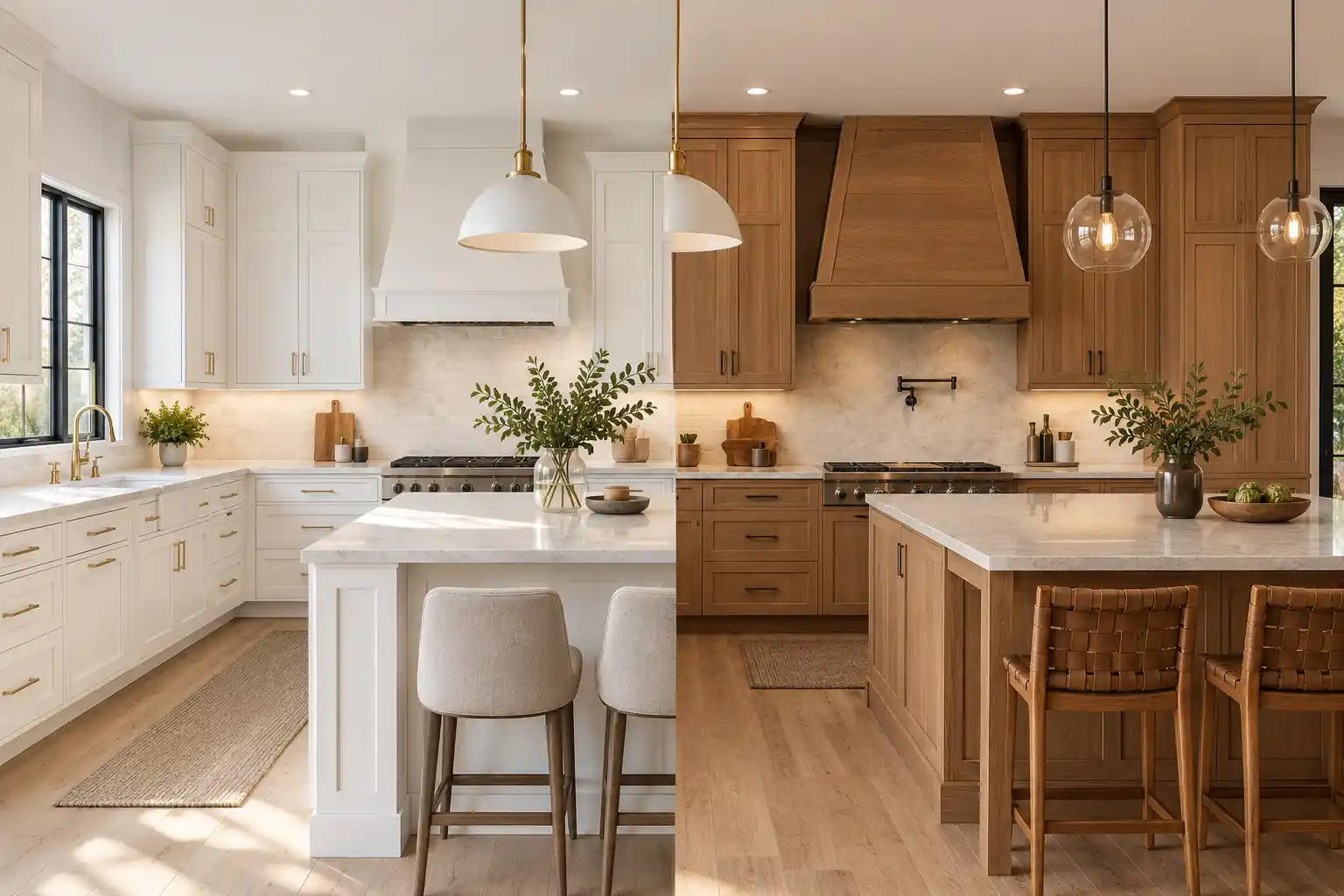
White and natural wood are two very different directions for kitchen cabinetry. White cabinets create a lighter, more uniform surface that can work with many countertops, floors, backsplashes, and hardware finishes. Wood cabinets introduce visible grain, natural color variation, and texture that can make the cabinetry a stronger part of the room’s character.
When comparing white cabinets vs wood cabinets, it is also important to separate finish from construction. White describes a cabinet color or painted finish, while wood may refer to the material, visible grain, or natural-looking finish. That distinction matters because cabinet quality, durability, and price depend on much more than whether the doors are white or wood.
The best way to compare the two is by looking at how each option affects lighting, visual weight, maintenance, cost, surrounding materials, and the overall style of your kitchen.
White Cabinets vs Wood Cabinets at a Glance
The most noticeable difference is visual consistency. White cabinetry generally creates a more uniform surface, while natural wood introduces grain and variation from door to door.
| Factor | White Cabinets | Wood Cabinets |
| Appearance | Light and uniform | Natural grain and color variation |
| Visible grain | Usually concealed by paint | Often visible |
| Visual texture | Lower | Higher |
| Color variation | Usually consistent | Varies by species and finish |
| Design flexibility | Works with many color palettes | Depends more on wood tone and undertone |
| Maintenance visibility | Dark marks and splashes may stand out | Grain may disguise some minor marks |
| Style options | Modern, transitional, traditional | Modern, transitional, rustic, traditional |
| Surface wear | Paint may reveal chips or edge wear | Some minor wear may blend with grain |
These differences help narrow the choice, but door profile, countertop color, flooring, lighting, and cabinet layout have just as much influence on the finished kitchen.
How White Kitchen Cabinets Change the Look of a Kitchen
White cabinetry creates a relatively consistent visual surface, which can reduce the sense of heaviness created by long runs of wall and base cabinets. It also provides a neutral background that allows countertops, backsplash tile, flooring, hardware, or lighting to become more prominent.
The exact shade of white makes a significant difference. Bright white, warm white, cream-white, and slightly gray-white finishes can respond very differently to the same room. A cabinet sample that looks neutral by itself may appear noticeably warmer when placed beside a cool quartz countertop or cooler next to cream walls and golden wood flooring.
Door style changes the result as well. White slab doors can create a streamlined contemporary kitchen, while white shaker cabinets can fit transitional or updated traditional spaces. Homeowners considering this direction can compare different white kitchen cabinet finishes rather than treating white as a single color.
White is especially useful when you want a relatively neutral foundation that can accommodate future changes to hardware, paint, backsplash, or decorative accents without requiring the cabinetry itself to change.
What Natural Wood Cabinets Bring to a Kitchen
Natural wood cabinetry makes grain, tone, and material variation part of the design. Oak, maple, walnut, and other woods can differ significantly in grain pattern and color, while stains and clear finishes can either emphasize or soften those characteristics.
Light oak can introduce texture without adding much visual weight. Maple often has a quieter grain, while walnut tends to create deeper color variation and stronger contrast. Darker stains can give cabinetry more depth, whereas clear or light finishes allow the natural tone of the wood to remain more visible.
Natural wood also has more stylistic range than it is sometimes given credit for. A stained raised-panel door may feel traditional, but a light wood slab door with minimal hardware can look distinctly contemporary. Homeowners who prefer warmer cabinetry can therefore explore natural and brown cabinet finishes without being limited to a traditional kitchen style.
White vs Wood Cabinets for Small or Low-Light Kitchens
Cabinet color becomes especially noticeable in kitchens with a compact footprint, extensive upper cabinetry, or limited natural light. White cabinets can reduce visual density because large cabinet surfaces remain light and relatively uniform. When combined with lighter walls, countertops, and effective task lighting, this can help a compact kitchen feel less enclosed.
Wood can also work well in a smaller space. Light oak, maple, and similar tones provide visible texture without introducing the visual weight of a very dark stain. Another approach is to use wood selectively, for example, on base cabinets or an island, while keeping upper cabinets white.
Lighting should be evaluated separately from room size. White surfaces reflect more available light, but white cabinetry cannot compensate for poor lighting throughout the room. Window placement, countertop reflectivity, backsplash materials, wall color, under-cabinet lighting, and bulb temperature all affect the result.
Likewise, wood cabinetry does not automatically make a kitchen dark. A light natural finish paired with a bright countertop and good lighting can work comfortably in a room with limited daylight. Dark walnut, espresso, or other deep finishes simply require more attention to the balance of light and dark surfaces around them.
White vs Wood Cabinets: Maintenance and Cleaning
Both finishes require routine cleaning, but they tend to reveal different types of everyday wear. White cabinets can make dark fingerprints, food splashes, grease, and scuffs easier to notice, particularly around frequently used doors, drawers, and cooking areas. Smooth or higher-sheen surfaces may also make some fingerprints more visible.
Natural grain can disguise certain minor marks, but wood cabinets still collect grease, dust, and residue. Very dark stained cabinetry can make dust particularly noticeable, while lighter or more varied grain patterns may conceal small marks between cleanings.
The finish system matters more than color when it comes to proper care. Abrasive cleaners, harsh chemicals, and excessive moisture can damage both painted and stained cabinetry. Following the manufacturer’s cleaning recommendations is therefore more important than assuming one finish is inherently easier to maintain.
Which Is More Durable: Painted White Cabinets or Wood Cabinets?
Cabinet durability cannot be determined from color alone. White describes a finish, while wood may describe the door material or the appearance of the surface, so the comparison needs to include the actual construction beneath the finish.
Long-term performance depends on door and cabinet-box materials, joinery, paint or stain quality, protective topcoat, hardware, installation, moisture exposure, and daily use. Painted cabinet doors may eventually show small chips, scratches, or wear around frequently handled edges, particularly when the underlying material contrasts with the painted surface.
Stained natural wood can make some small scratches or signs of wear less conspicuous because the grain remains visible, but it can still be scratched, dented, faded, or damaged by moisture. Natural wood also responds to changes in humidity, with the amount of movement depending on species, construction, and environmental conditions.
For a meaningful durability comparison, look at the specifications of the actual cabinet line, including materials, finish system, hardware, construction details, and warranty, not just the color of the door.
White Cabinets vs Wood Cabinets: Cost Considerations
White and wood cabinets can fall into similar price ranges, so finish alone is not a reliable way to predict cost. For Milwaukee projects, cabinet replacement may start around $5,000 to $12,000 for a more basic project, while larger semi-custom or custom kitchens can move into the $12,000 to $25,000+ range depending on the layout, cabinet line, materials, and upgrades.
The main difference is where finish-related upgrades occur. White cabinets may cost more when you choose premium paint, specialty colors, or detailed finishing, while natural wood pricing can rise with more expensive species such as walnut or specialty stains.
| Cost Factor | White Cabinets | Wood Cabinets |
| More affordable options | Standard painted finishes | Common wood species and standard stains |
| Cost can increase with | Premium paint or specialty finishes | Premium species or custom stains |
| Bigger overall price drivers | Cabinet line, construction, customization | Cabinet line, species, construction |
A standard white shaker cabinet may cost less than premium walnut cabinetry, but a highly customized painted cabinet can cost more than a simpler stained wood option. For a fair comparison, look at white and wood cabinets within the same stock, semi-custom, or custom cabinet level rather than comparing finish alone.
How White and Wood Cabinets Coordinate With Countertops
Countertops sit directly against the cabinetry, making undertone and contrast especially important. With white cabinets, a light countertop can create a continuous, restrained palette, while a dark countertop provides stronger separation. Warm beige, cream, or softly veined surfaces can also introduce warmth when the cabinet finish leans cool.
Wood cabinets require closer attention to the relationship between the countertop and the wood’s undertone. Two materials can both appear neutral on their own but clash when one leans yellow or red and the other leans cool gray. Light countertops are often useful with medium or dark wood because they create separation between the work surface and cabinetry, while light wood allows a broader range of tonal combinations.
Quartz, granite, quartzite, and other kitchen countertop materials should therefore be compared directly with the cabinet sample rather than selected independently. Physical samples under the lighting used in the kitchen give a more reliable impression than separate product photos.
How Cabinet Style Changes White and Wood Finishes
Cabinet finish and cabinet style are related, but they are not the same thing. White and wood describe the surface appearance, while slab, shaker, recessed-panel, raised-panel, and other door profiles help determine whether the cabinetry reads as modern, transitional, or traditional.
A white slab door with minimal hardware can create a very different kitchen from a white raised-panel door with crown molding. The same is true of wood: light oak slab cabinets can feel contemporary, while dark stained raised-panel cabinets may have a much more traditional character.
This distinction is useful when comparing cabinet styles because it prevents the common assumption that white automatically means modern or that wood automatically means traditional. Door profile, hardware, trim, countertop design, and finish all work together to establish the overall style.
Can You Combine White and Wood Cabinets?
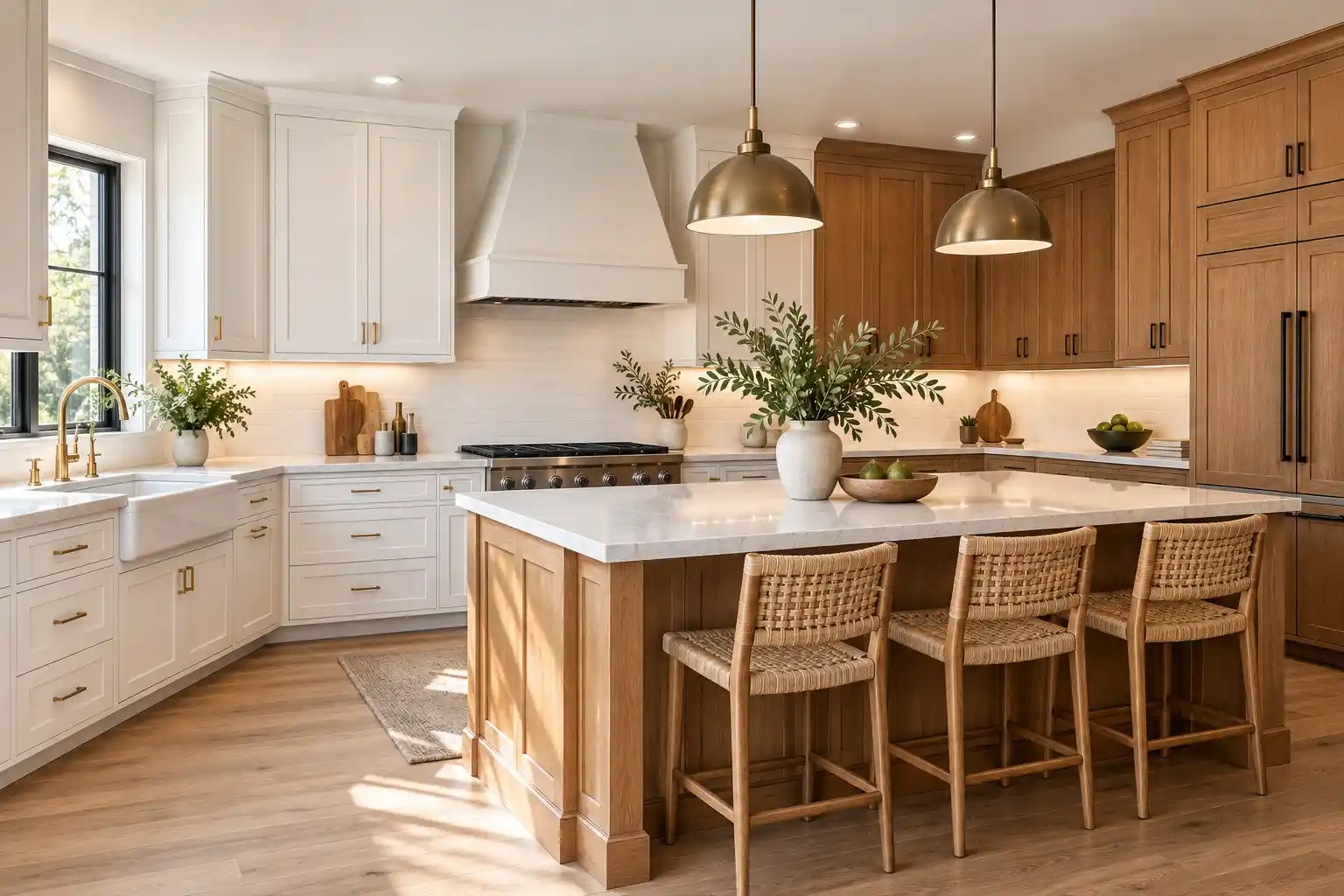
A white and wood kitchen can provide both the visual simplicity of painted cabinetry and the texture of natural grain. The combination works best when each finish has a clear role rather than appearing randomly throughout the room.
White perimeter cabinets with a wood island are one common approach because the perimeter remains visually light while the island becomes a warmer focal point. Wood base cabinets with white uppers can keep grain and texture below eye level while reducing visual weight above the countertop. Natural wood can also be limited to a pantry wall, range hood, or open shelving within a mostly white kitchen.
The key is restraint. If the room already includes prominent wood flooring, patterned countertops, a decorative backsplash, and several metal finishes, adding too many cabinet colors can make the design feel fragmented. Two finishes are usually most successful when their placement looks deliberate and they coordinate with materials already present elsewhere in the kitchen.
White Cabinets vs Wood Cabinets: Which Should You Choose?
White cabinets tend to make sense when you prefer a lighter, more uniform backdrop and want cabinetry that can work easily with changing hardware, backsplash colors, or decorative accents. They can also provide useful contrast against wood floors or a stronger countertop pattern.
Natural wood is worth considering when visible grain, warmth, texture, and material variation are important to the design. Light woods can keep the palette relatively restrained, while medium and darker finishes allow the cabinetry to become a more dominant visual feature.
If you like characteristics of both, a two-tone arrangement may be more appropriate than choosing one finish for every cabinet. The final decision should come from looking at cabinet volume, lighting, flooring, countertops, door style, and the materials that will remain in the room after the remodel.
Compare White and Wood Cabinets With Cabinets MKE
Choosing between white and wood cabinets becomes easier when you can compare actual finishes, door styles, countertops, and layouts together. Cabinets MKE helps Milwaukee homeowners evaluate these choices as part of the complete kitchen rather than selecting a cabinet finish in isolation.
At the Cabinets MKE showroom in Brookfield or during an in-home consultation, you can compare cabinet colors and door styles, coordinate countertops and flooring, and discuss how different options fit your available space and storage needs. Measurements and 3D kitchen design can then show how the selected cabinetry works across the full layout before installation.
If you are deciding between white cabinetry, natural wood, or a combination of the two, comparing the materials in person and seeing them within a planned layout can make the differences much clearer. Cabinets MKE can help you move from individual samples to a coordinated cabinet design that fits your Milwaukee kitchen.
Frequently Asked Questions
Are white cabinets more expensive than wood cabinets?
Not necessarily. Cabinet pricing depends on construction, manufacturer, material, wood species, finish process, customization, kitchen size, and installation. A premium painted cabinet can cost more than some stained wood options, while premium wood species can increase the cost of natural wood cabinetry.
Can I have white cabinets with wood floors?
Yes. The contrast between painted cabinetry and natural flooring can work well, particularly when their undertones coordinate. Warm flooring may pair more naturally with warm or neutral whites than with a strongly cool white.
Can I mix white and wood cabinets in the same kitchen?
Yes. White perimeter cabinets with a wood island, wood base cabinets with white uppers, or a natural wood pantry section are common ways to combine the two finishes without making the kitchen feel overly busy.
Are natural wood cabinets suitable for modern kitchens?
Yes. Light or medium natural woods paired with slab or simple door profiles, restrained hardware, and clean countertop lines can create a modern kitchen without covering the grain.
Do white cabinets work with warm countertops?
Yes. Warm quartz, granite, quartzite, and other countertop tones can complement white cabinetry, but the undertones should be compared directly. A warm countertop may pair more naturally with a soft or neutral white than with a strongly cool cabinet finish.