
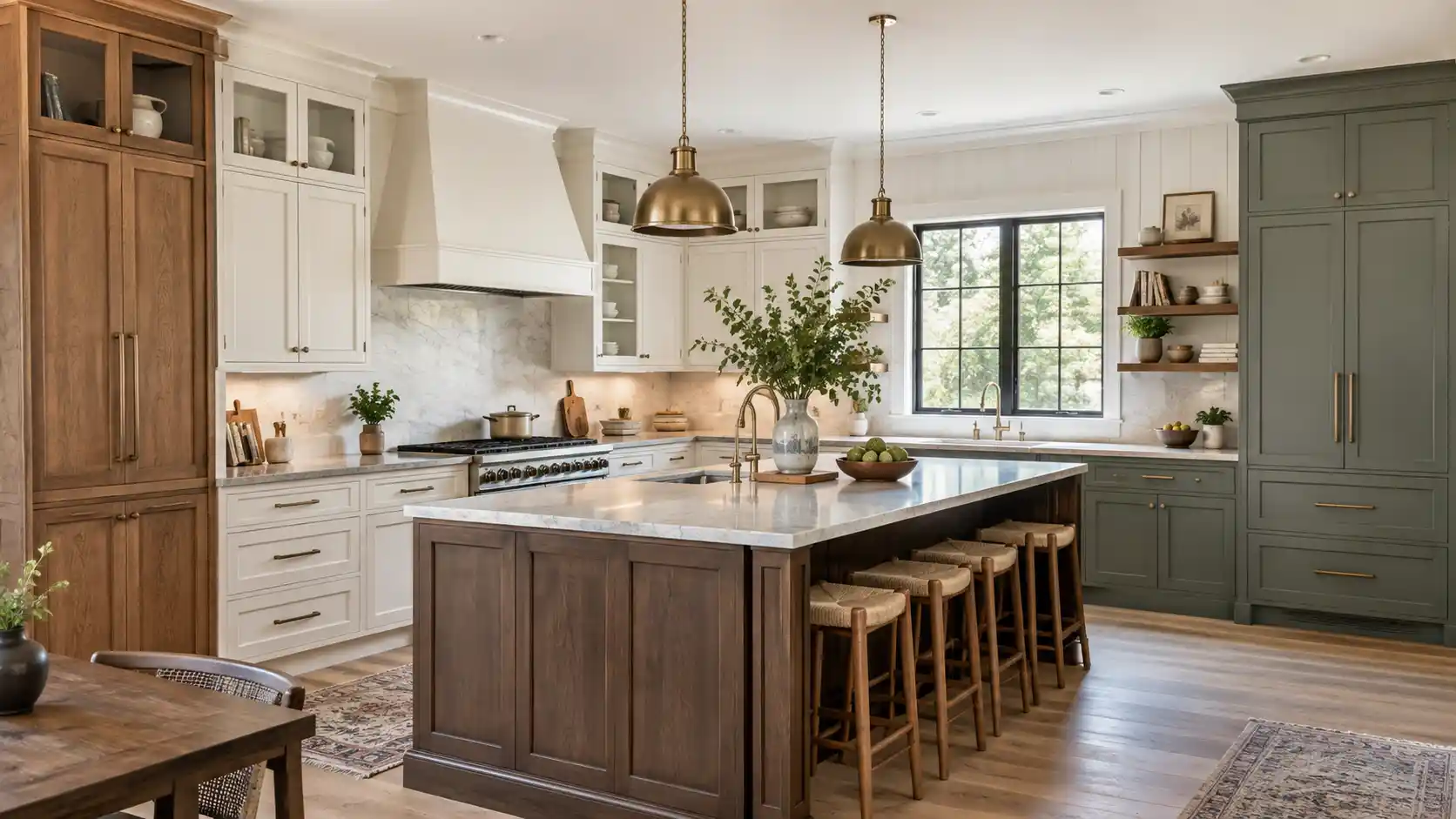
Choosing kitchen cabinets is not only about finding a door style or color you like. One of the first decisions is whether your project needs stock, semi-custom, or custom cabinets. These terms describe how much flexibility you have with cabinet dimensions, configurations, finishes, and modifications. That flexibility can affect how efficiently cabinetry fits the room.
These categories are not simply “good, better, best.” Custom cabinetry becomes more useful when the room or design requires dimensions and details that standard cabinet programs cannot provide. Understanding what each level actually changes can help you invest in customization where it improves the kitchen instead of paying for options the project does not need.
Stock vs. Semi-Custom vs. Custom Cabinets at a Glance
Here is the basic difference between the three kitchen cabinet options:
| Feature | Stock Cabinets | Semi-Custom Cabinets | Custom Cabinets |
| Cabinet sizing | Predetermined manufacturer sizes | Standard sizes with selected modification options | Made to project-specific dimensions |
| Layout flexibility | Lower | Moderate to high | Highest |
| Door and finish selection | More limited | Broader selection | Extensive possibilities |
| Interior configurations | Predetermined options | More organizational choices | Can be designed around specific requirements |
| Manufacturing process | Standardized production | Made to order within a cabinet program | Built specifically for the project |
| Lead time | Generally shortest | Usually longer than stock | Generally longest |
| Typical budget position | Generally lower | Generally mid-range | Generally higher |
| Best use | Straightforward layouts | Kitchens needing targeted flexibility | Complex dimensions or highly specific designs |
These differences are useful starting points, but the cabinet category does not automatically tell you how well a cabinet is built. Construction materials, hardware, finish quality, manufacturer standards, and installation still need to be evaluated separately.
What Are Stock Cabinets?
Stock cabinets are manufactured in predetermined sizes, configurations, door styles, and finishes. Instead of changing the cabinet itself to match every dimension in the kitchen, the layout is designed around the sizes available within that cabinet line.
For example, a manufacturer may offer base and wall cabinets through a series of standard widths. If the wall does not divide perfectly among those cabinet sizes, the design may use fillers, end panels, or changes in cabinet placement to complete the run.
Fillers are not automatically a sign of poor design. They can provide clearance beside a wall, allow doors and drawers to open correctly, and give installers material to adjust against an uneven surface. The concern is whether they are being used intentionally or simply compensating for cabinet sizes that do not fit the layout efficiently.
Stock kitchen cabinets are especially practical when the room works well with available dimensions and extensive modifications are unnecessary.
Advantages of Stock Cabinets
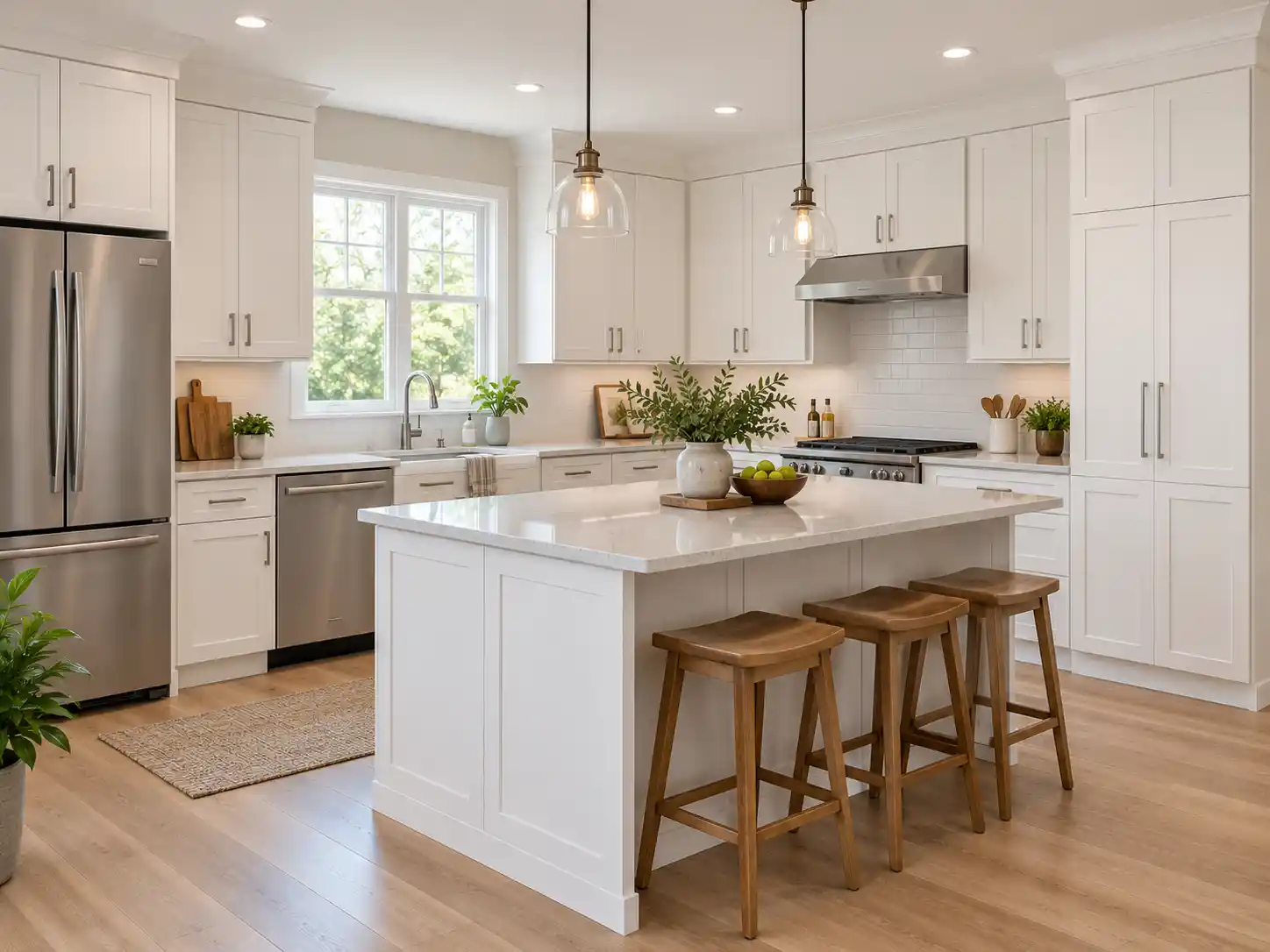
The biggest advantage of stock cabinetry is efficiency. Because the cabinet dimensions and product options are already established, homeowners can select from an existing collection rather than making decisions about every construction and sizing detail.
Stock cabinets can also support a shorter project timeline, particularly when the required cabinets are already available in inventory. Standardized production can make selection and ordering more straightforward than cabinetry requiring project-specific modifications.
They can also leave more room in the remodeling budget for countertops, appliances, flooring, lighting, hardware, or other improvements.
The important question is whether the available sizes work well in the actual kitchen—not simply whether stock cabinetry costs less.
Limitations of Stock Kitchen Cabinets
The main limitation is dimensional flexibility. A stock cabinet program may work efficiently in a straightforward kitchen while becoming restrictive around an unusual wall, appliance opening, window, doorway, ceiling condition, or narrow remaining space.
Finish and door selections may also be narrower because manufacturers typically concentrate on combinations that can be produced consistently at scale.
Storage options should also be reviewed before ordering. Many stock collections provide practical drawer bases, pantry cabinets, trash pull-outs, and corner solutions, but you generally choose from predetermined configurations rather than modifying the cabinet around a specific request.
Understanding different cabinet types and configurations can help you determine how base, wall, pantry, corner, and island cabinets may work within the available layout.
What Are Semi-Custom Cabinets?
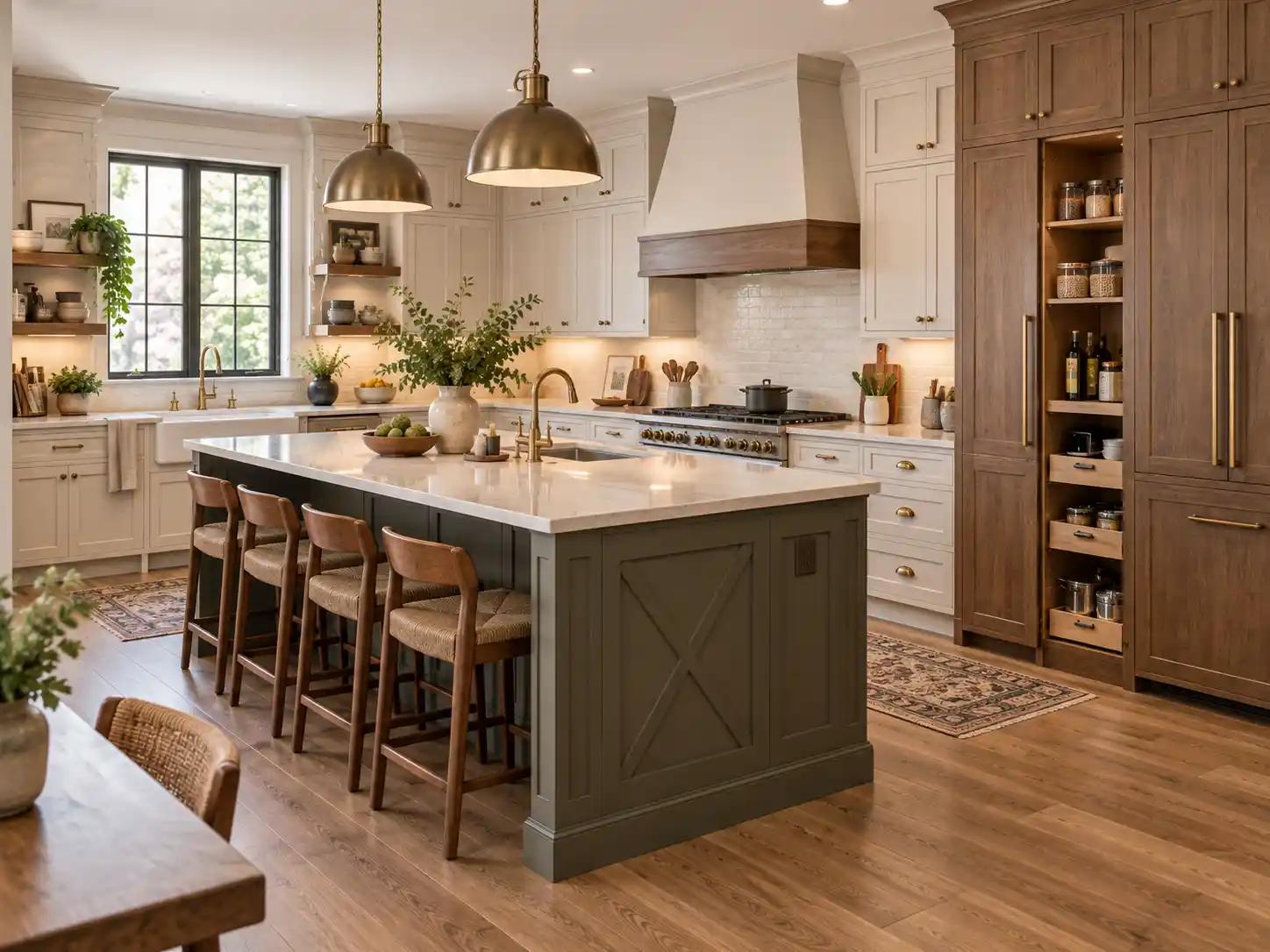
Semi-custom cabinets begin with an established manufacturer cabinet line but provide more modification options than a typical stock program.
The manufacturer still controls the construction system and defines which changes are available. Depending on the cabinet line, those options may include selected width or depth changes, additional door styles, more finishes, specialty storage, decorative details, finished interiors, or other configuration choices.
Semi-custom does not mean every dimension or feature can be changed. One manufacturer may allow depth modifications but restrict width changes. Another may offer many sizes, specialty cabinets, and finish combinations while limiting structural alterations. The specific modification list matters more than the semi-custom label itself.
Why Homeowners Consider Semi-Custom Cabinets
Semi-custom cabinetry is useful when a standard layout is close to working but needs targeted improvements. A kitchen may work with standard cabinet sizes along most walls but need a shallower cabinet near a doorway, a different pantry configuration, more drawer storage, finished island panels, or a cabinet size that makes one section of the layout work more efficiently.
In these situations, full custom cabinetry may provide flexibility the project does not need. Semi-custom allows homeowners to focus additional spending on modifications that make a measurable difference to fit, storage, or appearance.
What Are Custom Cabinets?
Custom cabinets are built around the requirements of a specific project rather than requiring the project to conform to a predetermined catalog of cabinet sizes.
Dimensions, configurations, materials, door details, finishes, trim, and storage can generally be developed with significantly more flexibility. Exact possibilities depend on the cabinet maker, construction method, materials, and project requirements. This changes the design process and gives more options to find a cabinet that perfectly fits your kitchen design and requirements.
When Custom Cabinetry Becomes Especially Useful
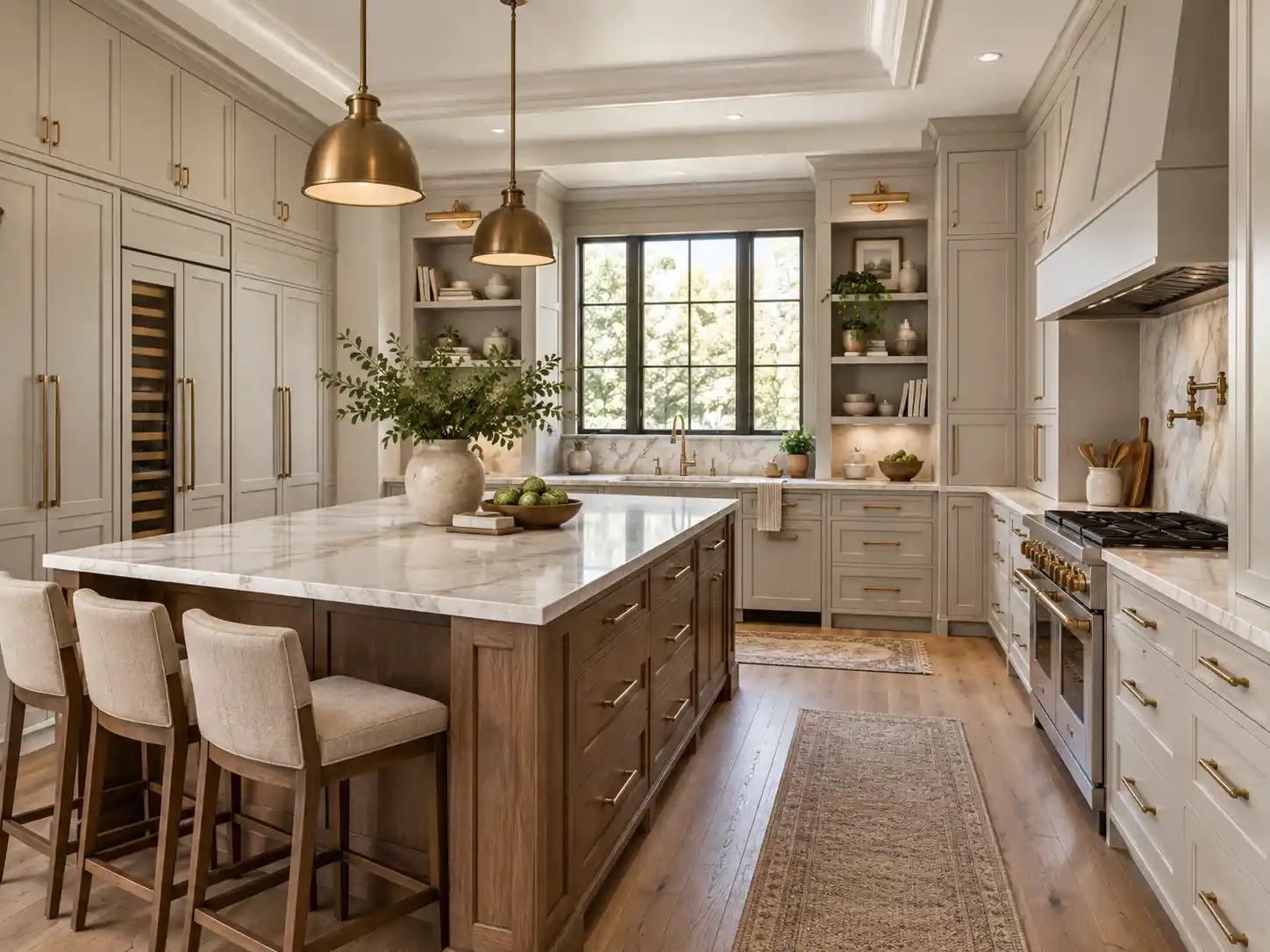
Custom cabinetry provides the clearest advantage when standard dimensions would require repeated compromises throughout the room.
An older home, for example, may have out-of-square walls, unusual window locations, existing architectural trim, soffits, tall ceilings, or appliance openings that do not align conveniently with a standard cabinet program.
Custom sizing can also support a specific architectural goal. Cabinetry may need to terminate precisely at a wall feature, extend to a particular ceiling height, align with an adjacent built-in, or maintain consistent proportions across a large cabinet run.
Specialized storage can provide another reason. A homeowner may want drawers designed around particular cookware, a pantry developed for specific storage needs, cabinetry surrounding unusual equipment, or another configuration unavailable from standard product lines.
The value of custom cabinetry is therefore not simply “more options.” It is the ability to solve design conditions that would otherwise require compromises.
How Cabinet Type Affects Your Kitchen
Once the three cabinet categories are understood, the more useful comparison is how each one affects actual kitchen planning.
1. Cabinet Sizes and Layout Flexibility
Stock cabinetry requires the designer to work primarily with predetermined dimensions. A successful stock layout depends on combining those sizes efficiently. Semi-custom cabinetry adds another layer of control by allowing selected dimensions or configurations to be modified when standard products create a problem.
Custom cabinetry gives the designer much greater freedom to develop cabinet dimensions around the layout itself. These differences become particularly noticeable at transitions: beside appliances, between windows, around corners, near door trim, at the end of cabinet runs, and where cabinetry meets architectural features.
One unusual dimension does not automatically justify custom cabinetry. The more often standard sizing forces compromises, however, the more valuable additional dimensional flexibility becomes.
2. Door Styles, Colors, and Finishes
Cabinet category also affects the size of the available design palette. Stock programs usually focus on popular door styles, finishes, and wood tones that can be produced efficiently.
Semi-custom collections often expand those choices with more door profiles, species, paints, stains, glazes, and decorative details. This can make it easier to coordinate cabinetry with countertops, flooring, backsplash materials, wall colors, and hardware.
Custom cabinetry provides the greatest opportunity for project-specific design requests, but more choice is not automatically useful.
If the exact white Shaker cabinet you want is already available in a well-built stock or semi-custom line, paying for a custom version may add cost without meaningfully improving the finished kitchen.
Define the desired appearance first. Then determine which cabinet category can provide it.
3. Interior Storage and Organization
Storage differences are less about how many accessories a cabinet has and more about where those accessories can be used.
Many stock cabinet collections already provide practical options such as drawer bases, pantry cabinets, trash pull-outs, roll-out trays, lazy Susans, and other corner solutions.
Semi-custom lines can expand those possibilities through additional cabinet dimensions, drawer combinations, interior fittings, and configuration choices.
Custom cabinetry becomes more valuable when storage must be designed around a specific item or routine rather than selected from a manufacturer’s available accessory list.
For example, a homeowner who wants deep drawers for pots and pans may find an appropriate stock drawer base. Someone who wants drawer dimensions or dividers planned around a specific cookware collection may need greater flexibility.
Start with what needs to be stored and where it should be accessible, then choose the cabinet level required to accomplish it.
4. Lead Time and Project Scheduling
Cabinet timelines generally become longer as more work must happen specifically for the order. Stock cabinetry can have the shortest availability when the required products are already in inventory. However, stock cabinets that need to be transferred, replenished, or specially ordered can still require additional fulfillment time.
Semi-custom cabinetry usually requires manufacturing after the specifications, modifications, and finishes are selected.
Custom cabinetry involves the greatest amount of project-specific work and may include drawings, approvals, material preparation, fabrication, and finishing.
Actual schedules vary by manufacturer and project. Homeowners working toward a specific remodel deadline should confirm current availability before coordinating demolition, countertop templating, appliance installation, or other trades around an assumed cabinet delivery date.
5. Cost and Budget Flexibility
Stock cabinets generally begin at a lower budget position because manufacturers can standardize dimensions, finishes, and production. Semi-custom pricing can increase as modifications, specialty configurations, finish choices, storage accessories, and decorative features are added.
Custom cabinetry generally requires the largest investment because more design and manufacturing work is dedicated to the specific project. But the cabinet category alone is not enough for an accurate comparison.
A simple custom cabinet project is not necessarily comparable to a heavily upgraded semi-custom kitchen containing premium finishes, specialty storage, decorative panels, and extensive trim.
When comparing stock vs. custom cabinet costs, focus on what each quote actually includes:
- Cabinet box construction
- Door and drawer materials
- Finished sides and panels
- Moldings and trim
- Interior accessories
- Hardware
- Cabinet modifications
- Delivery
- Installation
Does Custom Mean Better-Quality Cabinets?
Custom cabinetry does not essentially mean better-quality cabinets. Customization level and construction quality are different characteristics.
Stock, semi-custom, and custom describe the amount of design and dimensional flexibility available. They do not independently tell you how durable the cabinet box is, how well the drawers operate, or how the finish will perform.
A well-constructed stock cabinet can therefore be a better product than poorly constructed custom cabinetry. When comparing kitchen cabinet quality, look beyond the category name.
Cabinet Box Construction
Review the materials, thicknesses, joinery, fasteners, backs, shelves, and structural components used in the cabinet system.
Plywood, furniture board, MDF, and other engineered materials can each serve different purposes. A material name alone does not determine the overall quality of the cabinet.
Drawers, Slides, and Hinges
Check how drawers are constructed and what hardware is included. Consider drawer extension, load capacity, adjustment, soft-close operation, and how easily doors and drawers can be aligned after installation.
Shelving
Shelf thickness, span, adjustability, and expected load matter, particularly in wide cabinets or pantry areas where heavier items may be stored.
Finish Quality
Cabinet finishes are exposed to handling, cooking residue, cleaning, moisture, and light. Whenever possible, review a complete door sample rather than relying only on a small color chip or digital image. Pay attention to edges, corners, joints, and consistency across the entire surface.
Manufacturer Support and Warranty
Review what the warranty actually covers, which components are included, what exclusions apply, and how problems are handled.
The goal is to compare construction quality within each cabinet category instead of assuming the word “custom” automatically indicates a better-built product.
Which Type of Kitchen Cabinet Is Right for Your Remodel?
The right cabinet category becomes clearer when you compare the actual needs of your kitchen with the limitations of each product line.
Consider Stock Cabinets If Your Layout Is Straightforward
Stock cabinetry can make sense when:
- Standard cabinet sizes fit the kitchen efficiently
- Your preferred door style and finish are already available
- You do not need unusual cabinet depths or widths
- Standard storage configurations meet your needs
- Keeping the cabinet portion of the remodel within a tighter budget is important
- A shorter ordering timeline is a priority
Do not move into a more customizable category simply because it sounds more premium. If a stock collection gives you the layout, construction, appearance, and storage you need, additional flexibility may provide little practical benefit.
Consider Semi-Custom Cabinets If a Few Details Need More Control
Semi-custom cabinets deserve consideration when the overall layout works with established cabinetry but specific areas need additional flexibility.
This might include:
- Adjusting selected cabinet dimensions
- Expanding door or finish choices
- Adding specialized storage
- Improving an appliance surround
- Creating a more finished island
- Solving an awkward transition
- Adding decorative or furniture-style details
The key is being able to identify which modifications improve the kitchen enough to justify their additional cost.
Consider Custom Cabinets If the Room Drives the Design
Custom cabinets become most useful when the architecture or design cannot be handled efficiently within a standard cabinet system.
Examples include:
- Multiple unusual wall dimensions
- Significant out-of-square conditions
- Cabinetry fitted around architectural details
- Non-standard ceiling relationships
- Highly specific appliance integration
- Specialized storage dimensions
- Detailed built-in cabinetry
- A design requiring precise proportions throughout the room
For Milwaukee-area remodeling projects, accurate measurements are especially important when cabinetry must work around existing windows, trim, walls, soffits, flooring transitions, appliances, or other conditions remaining in place.
The decision should come from the room and project requirements, not from assuming that the most customizable option is automatically the most appropriate.
Compare Cabinet Options With Cabinets MKE
Choosing between stock, semi-custom, and custom cabinets becomes easier when the decision starts with the actual kitchen rather than a product label.
Cabinets MKE helps Milwaukee-area homeowners compare cabinet options based on room dimensions, storage requirements, preferred styles and finishes, project budget, and layout needs.
Accurate measurements help determine where standard cabinetry works efficiently and where additional flexibility could improve the design. A free 3D cabinet design also gives homeowners an opportunity to review cabinet placement, appliance relationships, storage, clearances, and the overall kitchen layout before ordering.
Find the Right Cabinets for Your Kitchen
Stock, semi-custom, and custom cabinets solve different remodeling needs. Stock cabinetry emphasizes standardization and efficiency, semi-custom cabinetry adds targeted flexibility, and custom cabinetry gives designers greater control over project-specific dimensions and details.
The right choice depends on your kitchen dimensions, storage requirements, design priorities, project schedule, and budget. Paying for more customization only makes sense when that additional flexibility improves how the kitchen looks or functions.
Cabinets MKE can help you compare cabinet options with accurate measurements and a free 3D cabinet design so you can see how different configurations may work in your space before cabinets are ordered.
Frequently Asked Questions
Are semi-custom cabinets the same as custom cabinets?
Semi-custom cabinets are produced within an established manufacturer’s cabinet system and allow selected modifications. Custom cabinets are built around the specific dimensions and requirements of an individual project. The exact capabilities of semi-custom cabinetry vary by manufacturer.
Can stock cabinets be modified?
Stock cabinets are generally ordered in the dimensions and configurations offered by the manufacturer. Designers can still create a tailored overall layout using different cabinet sizes, panels, trim, and accessories, but the individual cabinets usually offer fewer modification options than semi-custom or custom cabinetry.
Do semi-custom cabinets come in different sizes?
Yes, but available dimensions and modifications depend on the cabinet line. Some manufacturers provide numerous size choices and selected dimensional changes, while others have stricter limits.
Do custom cabinets take longer to make?
Generally, custom cabinets require more project-specific work than stock cabinetry, which can increase the timeline. Exact lead times depend on the cabinet maker, materials, finish, project complexity, and current production schedule.
Can stock cabinets work in an older home?
Yes. The age of the home does not determine which cabinet category must be used. What matters is how the room dimensions and architectural conditions relate to the available cabinet sizes.