
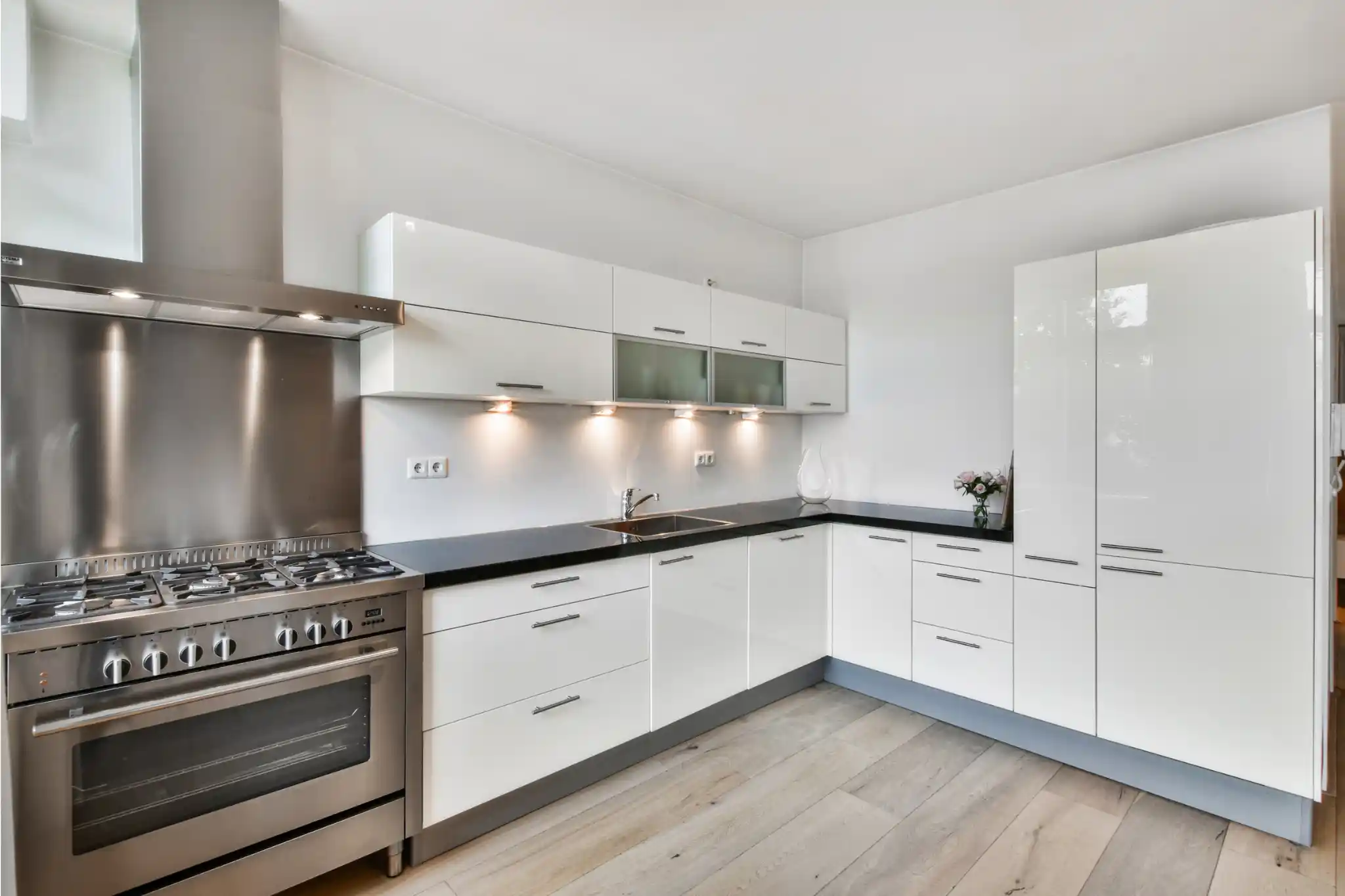
The cost to install kitchen cabinets depends on more than the cabinets alone. Many homeowners check cabinet prices online and assume that number includes the full project. In reality, the final cabinet installation cost may include measuring, delivery, old cabinet removal, assembly, base cabinet leveling, wall cabinet mounting, trim, hardware, cleanup, and small adjustments needed before the kitchen is ready for countertops.
For many standard projects, kitchen cabinet installation can range from about $3,000 to $8,000 for simpler jobs. Larger kitchens, semi-custom cabinets, custom layouts, premium finishes, and detailed installation work can move the total into the $10,000 to $30,000+ range. Installed cabinet pricing often falls between $80 and $400 per linear foot for stock cabinets, $150 and $800 per linear foot for semi-custom cabinets, and $500 to $1,200+ per linear foot for custom cabinets.
For Milwaukee, WI homeowners, the final number often depends on the home itself. Older kitchens may have uneven walls, sloped floors, tight corners, old soffits, or previous remodel work that makes installation more detailed. That is why a local measurement is important before relying on general price ranges.
Key Takeaways
- The kitchen cabinet installation cost can be priced by linear foot, cabinet count, hourly labor, or full project scope.
- A basic stock cabinet installation usually costs less than a custom kitchen with tall pantry cabinets, crown molding, finished panels, and detailed storage.
- Labor-only installation is different from a full installed cabinet package. Homeowners should always ask what is included.
- Old cabinet removal, wall repair, delivery, trim, hardware, plumbing, and electrical adjustments can increase the final price.
- Milwaukee homeowners should request an itemized estimate before comparing the price to install kitchen cabinets.
Average Cost to Install Kitchen Cabinets in 2026
Most cabinet installation estimates fall into two main categories: labor-only installation and full installed cabinet cost. Labor-only pricing covers the work of installing cabinets. Full installed pricing may include the cabinets, labor, delivery, trim, and other project details, depending on the company.
Installed Cabinet Cost by Linear Foot
Linear foot pricing is one of the most common ways to estimate the cost to install cabinets in kitchen spaces. It measures the total length of cabinet runs. A simple straight wall of cabinets will usually cost less than an L-shaped or U-shaped layout with corners, tall cabinets, finished panels, and an island.
| Cabinet Type | Estimated Installed Cost Per Linear Foot | Best Fit |
| Stock Cabinets | $80–$400 | Simple layouts, budget updates, rental homes |
| Semi-Custom Cabinets | $150–$800 | Most homeowner kitchen upgrades |
| Custom Cabinets | $500–$1,200+ | Unique layouts, premium finishes, detailed storage |
These ranges are useful for early planning, but they should not be treated as fixed prices. The final cabinet installation cost depends on cabinet quality, layout, labor, finish details, and site conditions.
Average Total Project Cost
A smaller cabinet installation may start around $3,000 to $7,000 when the layout is simple and stock cabinets are used. A standard kitchen using semi-custom cabinets may land closer to $8,000 to $20,000. A larger or custom kitchen can move into the $20,000 to $40,000+ range, especially when the project includes an island, pantry wall, trim, finished ends, and specialty storage.
| Project Type | Estimated Installed Range |
| Basic cabinet installation | $3,000–$8,000 |
| Mid-range cabinet installation | $8,000–$20,000 |
| Larger semi-custom installation | $15,000–$30,000 |
| Custom cabinet installation | $20,000–$40,000+ |
The best way to understand your real cost is to compare the cabinet type, kitchen size, labor details, and what is included in the estimate.
What Does Kitchen Cabinet Installation Cost Actually Include?
A cabinet installation quote should explain exactly what the installer will do. Some quotes only cover labor. Others include cabinets, delivery, removal, trim, hardware, and finishing work.
Cabinet Hanging, Leveling, and Securing
This is the main part of the installation. Base cabinets must be level and properly fastened before countertops are measured or installed. Wall cabinets must be securely mounted to studs and aligned with the rest of the kitchen.
A proper installation may include:
- Setting and leveling base cabinets
- Hanging upper wall cabinets
- Fastening cabinets securely
- Aligning cabinet faces
- Adjusting doors and drawers
- Preparing cabinet tops for countertop templating
If base cabinets are not level, countertop installation can become difficult. If wall cabinets are not secured correctly, they may shift, sag, or become unsafe over time.
Cabinet Assembly or Prep Work
Ready-to-assemble cabinets may cost less to buy, but they can add labor time. Someone has to assemble each box, check the parts, square the frames, and prepare the cabinets for installation.
Pre-assembled cabinets may reduce prep time, but they can cost more upfront and may require more careful delivery handling. When comparing quotes, homeowners should ask whether cabinet assembly is included.
Trim, Fillers, Panels, and Toe Kicks
Trim work makes the cabinet installation look complete. Fillers close small gaps between cabinets and walls. Panels cover exposed cabinet sides. Toe kicks finish the bottom cabinet area. Crown molding can connect wall cabinets to the ceiling or create a more refined upper detail.
These pieces may sound minor, but they affect the final look. A low installation price may not include all of them.
| Finish Item | Estimated Cost Impact |
| Fillers and toe kicks | $200–$800+ |
| Finished side panels | $150–$600+ each |
| Crown molding | $4–$25+ per linear foot |
| Decorative trim package | $500–$3,000+ |
Hardware and Final Adjustments
Cabinet hardware includes knobs, pulls, hinges, drawer slides, and soft-close features. Some cabinet lines include soft-close hardware, while others charge extra.
After installation, the installer should adjust doors, drawers, hinges, and reveal lines. These final details help the kitchen look even and work smoothly.
Labor Cost to Install Kitchen Cabinets
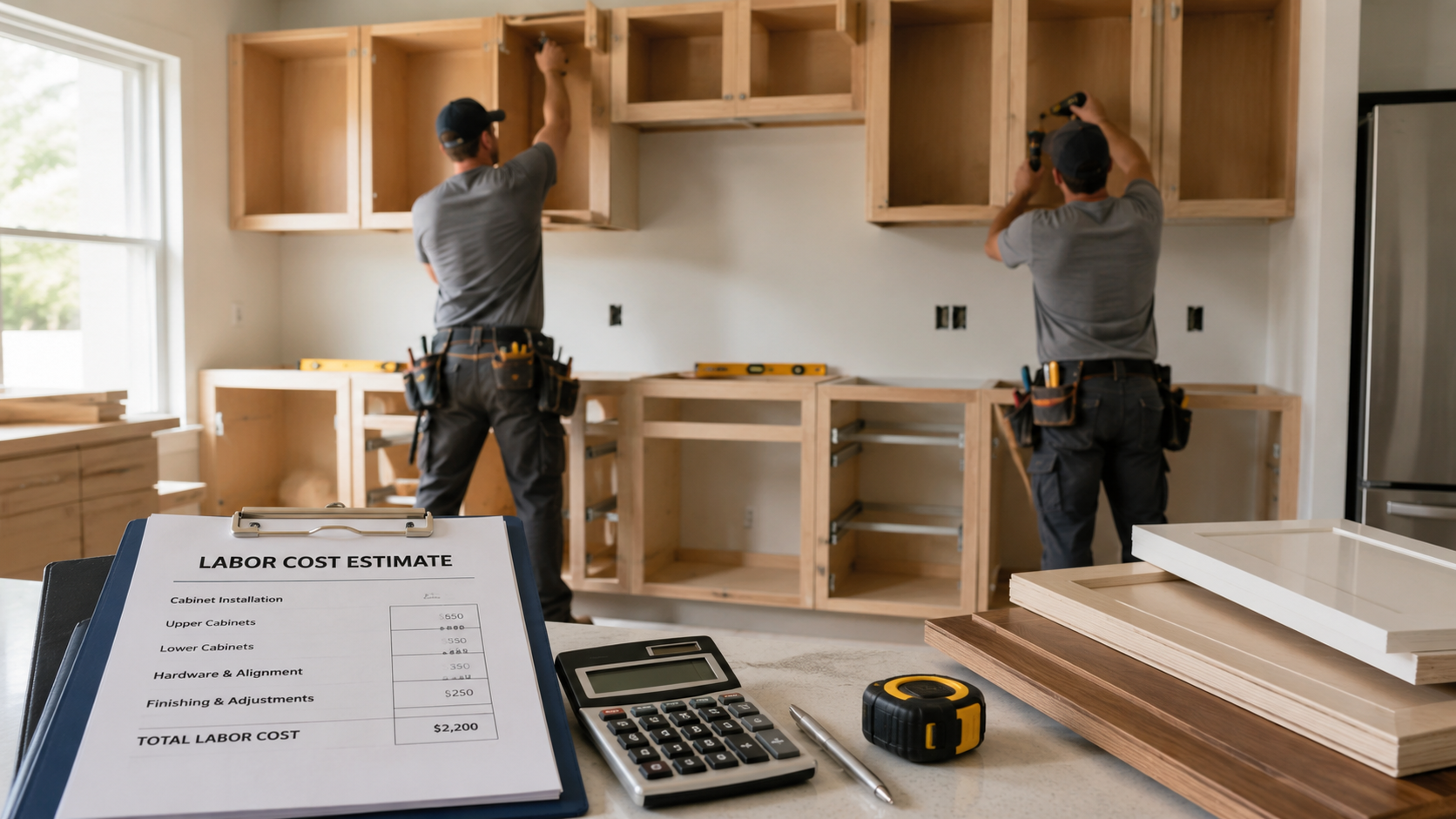
Labor is a major part of the cabinet installation cost. It can be charged hourly, per cabinet, per linear foot, or as one full project price.
Hourly vs. Per Linear Foot Pricing
Cabinet installation labor often ranges from $50 to $250 per hour depending on the project, installer experience, and complexity. Per-linear-foot labor can range from about $50 to $300 per linear foot, especially when the job includes detailed fitting, trim, or custom work.
| Labor Pricing Method | Estimated Range | Best Used For |
| Hourly labor | $50–$250 per hour | Small adjustments, simple jobs, repair-style work |
| Per cabinet | $50–$300+ per cabinet | Smaller installations or partial replacements |
| Per linear foot | $50–$300 per linear foot | Full cabinet installations |
| Full project quote | Varies by scope | Complete kitchen cabinet projects |
A full project quote is often easier for homeowners because it gives one clear number. However, the quote should still show what is included.
Cabinet Installer vs. Handyman
A handyman may be enough for a very simple stock cabinet installation. For example, replacing a small cabinet run in a laundry area or installing a basic cabinet in a rental kitchen may not require detailed custom fitting.
A professional cabinet installer is usually the better choice when the kitchen includes:
- Semi-custom or custom cabinets
- Tall wall cabinets
- Crown molding
- Pantry cabinets
- Finished side panels
- A kitchen island
- Uneven walls or floors
- Countertop coordination
- Detailed door and drawer alignment
Kitchen cabinets are not just boxes on a wall. They support countertops, frame the kitchen layout, and affect how the room functions every day.
Why Installation Quality Matters
Poor installation can create problems even when the cabinets themselves are good quality. Doors may not line up. Drawers may rub. Fillers may look uneven. Countertops may not sit correctly. Wall cabinets may leave gaps or feel unstable.
A skilled installer protects the cabinet investment by making sure everything is level, secure, aligned, and ready for the next phase of the kitchen project.
Cost to Install Cabinets in Kitchen by Project Size
Kitchen size affects the price, but cabinet count and installation details matter more than square footage alone. A small kitchen with tight corners may require more careful work than a larger kitchen with a simple straight layout.
Small Kitchen Cabinet Installation Cost
Small kitchens are common in condos, apartments, older Milwaukee homes, and compact galley layouts. These projects may include 10 to 15 linear feet of cabinetry.
| Small Kitchen Project | Estimated Installed Range |
| Stock cabinet install | $3,000–$7,000 |
| Semi-custom cabinet install | $5,000–$10,000 |
| Custom cabinet install | $10,000–$18,000+ |
A small kitchen can still become expensive if the layout needs custom sizing, deep storage drawers, a tall pantry cabinet, or wall repairs after old cabinet removal.
Standard Kitchen Cabinet Installation Cost
A standard kitchen may have around 20 to 30 linear feet of cabinets. Many pricing examples use a 10×10 kitchen as a comparison model, but real homes rarely match that exactly. Cabinet height, drawer count, appliance openings, corners, trim, and finish details all affect the final estimate.
| Standard Kitchen Project | Estimated Installed Range |
| Stock cabinet install | $6,000–$12,000 |
| Semi-custom cabinet install | $10,000–$22,000 |
| Custom cabinet install | $18,000–$35,000+ |
This is the range where many homeowners begin comparing cabinet lines, finishes, and installation details. A quote that includes removal, delivery, trim, and hardware may look higher at first but may be more complete.
Large Kitchen Cabinet Installation Cost
Large kitchens may include 30 to 45+ linear feet of cabinets. They often have islands, pantry walls, built-ins, refrigerator panels, crown molding, and more drawer storage.
| Large Kitchen Project | Estimated Installed Range |
| Stock cabinet install | $10,000–$20,000 |
| Semi-custom cabinet install | $18,000–$35,000 |
| Custom cabinet install | $30,000–$50,000+ |
Large kitchens usually need more planning. The installer may need to coordinate island placement, appliance openings, finished cabinet sides, and exact countertop support.
Cabinet Installation Cost by Cabinet Type
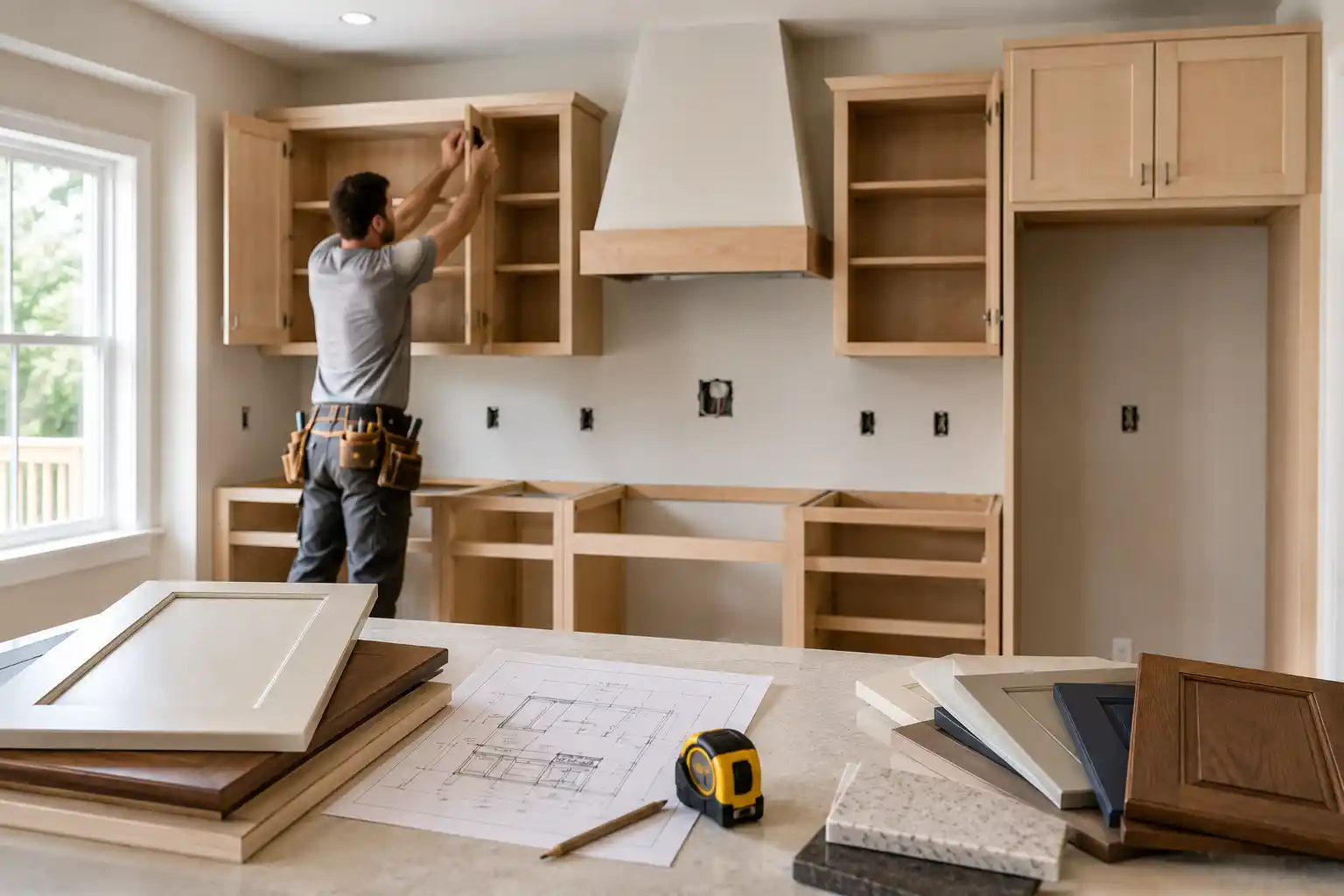
The type of cabinet you choose affects both product cost and installation needs.
Stock Cabinet Installation
Stock cabinets come in standard sizes and finishes. They are usually faster to order and more budget-friendly. Installation may also be simpler when the kitchen dimensions fit standard cabinet sizes.
The challenge comes when the room does not match those sizes. Installers may need fillers, trim, or layout adjustments to make the cabinets fit properly. In older Milwaukee kitchens, this can be common.
Estimated stock cabinet installation: $80 to $400 per linear foot installed, depending on product quality, labor, and project scope.
Semi-Custom Cabinet Installation
Semi-custom cabinets give homeowners more flexibility. They may offer more widths, heights, finishes, drawer options, and storage features.
Estimated semi-custom installation: $150 to $800 per linear foot installed.
Semi-custom cabinets are often a practical choice for homeowners who want a better fit than stock cabinets without the full custom kitchen cabinets cost. Installation may take more planning because there are more finish details and accessories to align.
Custom Kitchen Cabinet Installation
Custom cabinets are built to match the kitchen. They can include unusual dimensions, specialty storage, inset doors, finished ends, crown molding, appliance panels, and matching island details.
Estimated custom cabinet installation: $500 to $1,200+ per linear foot installed.
Custom installation costs more because the work is more exact. The installer has to protect the finished product, fit pieces precisely, adjust details carefully, and make sure the final kitchen looks intentional rather than pieced together.
DIY vs Professional Kitchen Cabinet Installation Cost Comparison
Some homeowners consider DIY cabinet installation to save money. This can work for small, simple projects, but kitchen cabinets require accurate measuring, leveling, wall fastening, door alignment, and countertop preparation. A mistake can lead to crooked cabinets, countertop delays, damaged walls, or extra repair costs.
DIY may reduce labor costs, but it does not remove the cost of tools, materials, hardware, delivery, cabinet assembly, wall repair, and possible corrections.
| Installation Option | Estimated Cost | Best For | Main Risk |
| DIY Cabinet Installation | $500–$3,000+ in tools, supplies, and prep costs | Small stock cabinet projects | Measurement mistakes, uneven cabinets, safety issues |
| Handyman Installation | $1,500–$6,000+ | Simple cabinet replacements | May not be ideal for complex layouts |
| Professional Cabinet Installation | $3,000–$15,000+ labor/project scope | Standard to detailed kitchen projects | Higher upfront cost but better accuracy |
| Custom Cabinet Professional Install | $10,000–$30,000+ installed package | Premium kitchens and custom layouts | Requires careful planning and exact quote |
DIY installation may look cheaper at first, but it can become expensive if cabinets are not level, wall cabinets are not secured properly, or the layout does not fit. Homeowners may also need to buy or rent tools, including levels, clamps, stud finders, drills, saws, shims, cabinet screws, and installation hardware.
When DIY Cabinet Installation May Work
DIY may be possible when the project is small, the cabinets are stock sizes, the walls are straight, and the homeowner has experience with carpentry. It may work for a laundry room cabinet, garage storage cabinet, or a very simple kitchen section.
Even then, measurements must be accurate. A small mistake can create gaps, door alignment issues, or countertop problems later.
When Professional Installation Is the Better Choice
Professional installation is usually better when the kitchen includes wall cabinets, semi-custom cabinets, custom cabinets, an island, pantry cabinets, crown molding, appliance panels, or countertop coordination.
It is also the safer choice when the home has uneven walls, sloped floors, older framing, or a layout that needs fillers and trim. Professional installers know how to level cabinets, secure upper cabinets, adjust doors, and prepare the base cabinets for countertops.
Which Option Gives Better Long-Term Value?
DIY may save money on labor, but professional installation usually gives better long-term value for a full kitchen project. Cabinets are used every day, and they must support countertops, hold weight, and stay aligned over time.
For Milwaukee homeowners investing in new kitchen cabinets, professional installation can help protect the cabinet investment and reduce the chance of costly corrections after the project starts.
Extra Costs That Can Change the Final Installation Price
The price to install cabinets can change after measuring if the kitchen needs extra work. These add-ons should be discussed before the project starts.
Old Cabinet Removal and Disposal
Old cabinet removal is often priced separately. The cost depends on cabinet count, how cabinets were installed, whether countertops are being removed, and how much disposal is needed.
Estimated removal cost: $300 to $1,500+.
A smaller cabinet removal may stay closer to the lower end. A larger kitchen with old countertops, built-in cabinets, heavy materials, or difficult disposal needs may cost more.
Wall Repair After Cabinet Removal
Once old cabinets come down, hidden issues may appear. Drywall may be damaged. Old backsplash may leave rough surfaces. Previous installers may have patched walls unevenly. Electrical or plumbing openings may need adjustment.
Estimated wall repair range: $300 to $1,500+, depending on condition.
Wall repair is important because cabinets need a stable and even surface. Skipping this step can affect alignment.
Plumbing and Electrical Adjustments
Cabinet installation can involve plumbing or electrical changes when the sink base moves, dishwasher location changes, outlets need relocation, or under-cabinet lighting is added.
Estimated trade-related costs may include:
| Work Type | Estimated Cost |
| Basic plumbing adjustment | $150–$700+ |
| Sink or dishwasher line adjustment | $300–$1,200+ |
| Outlet relocation | $150–$500+ |
| Under-cabinet lighting prep | $300–$1,500+ |
| Larger electrical or plumbing changes | Varies by scope |
These costs are usually separate from cabinet installation unless the contractor provides a full kitchen remodeling package.
Countertop Coordination
Cabinets must be installed correctly before countertops are templated. If base cabinets are not level, countertop fabrication and installation can be delayed.
Countertops are usually a separate cost. Depending on the material and size of the kitchen, countertop installation may add several thousand dollars to a larger kitchen project. Cabinet installation should always be planned with countertop support in mind.
Hardware, Accessories, and Soft-Close Upgrades
Cabinet hardware and accessories can improve daily function but also raise the final price.
| Upgrade | Estimated Cost Impact |
| Knobs and pulls | $3–$50+ each |
| Full kitchen hardware package | $200–$1,500+ |
| Soft-close hinges | $6–$14+ per door if not included |
| Pull-out shelves | $150–$500+ each |
| Lazy Susan cabinet | $300–$900+ |
| Trash pull-out | $300–$800+ |
| Decorative molding | $500–$3,000+ |
The right upgrades depend on how the kitchen is used. Pull-outs, deep drawers, and pantry organizers often add more daily value than decorative upgrades in low-use areas.
Cabinet Installation vs. Full Kitchen Remodeling Cost
Not every cabinet project is a full remodel. Some homeowners only replace cabinets. Others update the entire kitchen.
When Installation Is a Standalone Project
Cabinet installation may be a standalone project when the existing layout stays the same. The sink, dishwasher, appliances, walls, flooring, and lighting remain mostly in place.
This type of project is usually easier to estimate because the work is focused on removing old cabinets and installing new ones.
When Cabinet Installation Becomes Part of a Remodel
The project becomes larger when homeowners move appliances, change plumbing, install new flooring, replace countertops, update backsplash, or add lighting.
At that point, the average cost of kitchen installation is no longer just about cabinets. It becomes part of a full kitchen remodeling budget.
How Cabinets MKE Helps Plan Both
Cabinets MKE can help homeowners plan cabinet selection, kitchen cabinet installation, 3D design, measurements, countertops, flooring coordination, and broader kitchen remodeling support.
This helps keep the cabinet plan connected to the rest of the project instead of treating it as a separate purchase.
How to Save Money on Kitchen Cabinet Installation Without Cutting Corners
A lower price is helpful only if the final result still works well. The goal is to control waste, avoid mistakes, and spend money where it matters most.
Keep the Existing Layout When Possible
Moving the sink, dishwasher, range, or refrigerator can add plumbing, electrical, flooring, and countertop costs. If the current layout works, keeping major locations in place can reduce the total project cost.
Cabinet design can still improve storage without moving every major item.
Choose the Right Cabinet Type
Stock cabinets may be the best choice for a simple kitchen. Semi-custom cabinets may be better when the homeowner wants improved storage and finish choices. Custom cabinets are useful when the room has unusual dimensions or needs a tailored layout.
The cheapest cabinet type is not always the best value. The right choice is the one that fits the home without creating extra labor or awkward gaps.
Spend More on High-Use Areas
Some upgrades are worth the money because they make daily life easier. Lower cabinet pull-outs, deep drawers, pantry storage, trash pull-outs, and island storage often provide strong value.
Instead of upgrading every cabinet, focus on the areas used most often.
Get Measurements Before Ordering Cabinets
Wrong measurements can lead to delays, returns, filler problems, and extra labor. Before ordering cabinets, the kitchen should be measured carefully.
A professional measurement helps confirm cabinet sizes, appliance openings, ceiling height, wall conditions, and trim needs.
Is Professional Cabinet Installation Worth It?
Professional installation is worth considering because the cabinets are a major investment, the layout is always detailed, and the kitchen needs long-term durability.
For instance, semi-custom and custom cabinets often include more details than basic stock cabinets. These may include fillers, panels, trim, tall cabinets, specialty drawers, and built-in storage. Skilled fitting protects the look and function of these features.
A clean cabinet installation depends on reveal lines, filler placement, trim cuts, crown molding, hardware positioning, door alignment, and drawer adjustment. These small details are what make the kitchen look polished instead of unfinished.
Get a Kitchen Cabinet Installation Estimate in Milwaukee, WI
The cost to install kitchen cabinets depends on cabinet type, kitchen size, labor, removal needs, wall conditions, trim, hardware, and project complexity. A simple stock cabinet installation may cost a few thousand dollars, while larger semi-custom or custom cabinet projects can reach much higher price ranges.
For Milwaukee homeowners, the best first step is an accurate local estimate. Cabinets MKE can help with kitchen cabinets in Milwaukee, WI, custom kitchen cabinets, 3D design, in-home measurements, installation guidance, and same-day estimates where available.
A clear quote helps you understand what is included, where the money is going, and which cabinet option makes the most sense for your home.
FAQs
What is the average cost to install kitchen cabinets?
The average cost to install kitchen cabinets often ranges from $3,000 to $8,000 for simpler projects. Larger semi-custom or custom installations can cost $10,000 to $30,000+, depending on kitchen size, cabinet type, labor, trim, removal, and project complexity.
How much does kitchen cabinet installation cost per linear foot?
Kitchen cabinet installation can range from about $80 to $400 per linear foot for stock cabinets, $150 to $800 per linear foot for semi-custom cabinets, and $500 to $1,200+ per linear foot for custom cabinets. The final range depends on cabinet quality, layout, labor, and finish details.
What is the labor cost to install kitchen cabinets?
Labor can cost around $50 to $250 per hour or $50 to $300 per linear foot, depending on the installer and project scope. More detailed layouts, custom cabinetry, wall issues, floor leveling, and trim work can increase labor time.
Are custom cabinets more expensive to install?
Yes, custom cabinets are usually more expensive because they are built for exact measurements and often include more detailed finish work. Custom cabinet projects may include specialty storage, tall cabinets, appliance panels, crown molding, and other features that require careful installation.
How long does it take to install kitchen cabinets?
A straightforward cabinet installation may take a few days once cabinets are on site. Larger kitchens, custom cabinets, countertop coordination, trim work, and remodeling changes can extend the timeline.